Monday, 8 April 2013

Jules Cheret


Jules Cheret was born in Paris in 1836. He was placed in a three year apprenticeship with a lithographer by his father who was a typographer. This is done due to low finances in the family and would have helped to sustain his formal education which ended at age of 13. Cheret's formal training in arts was limited to a course at the Ecole Nationale de Dessin.
Though Cheret was able to sell some of his art sketches to a number of music publishers in Paris, he was not satisfied. Therefore in hope of finding a greater opportunity as an artist - he left for London. He then later returned to Paris after working for The Maple Furniture Company with no more money than when he started. Although this did deter him and his determination led him his first task to create a poster. This later would reveal his role as the master of the poster.
His first poster was created in 1858. It was during this time he first worked in one or two colors. Cheret, in 1869, he introduced a new system of printing from three stones. These stones were black, red and 'fond gradue' Cheret had achieved what no other artists had done before. This was creating a process which was the basis of his color lithographic posters.
His work empowered uniqueness and aesthetic finesse of his creative endeavors. This was done through his work which showed a combination of delicate, powdery and graceful fluidity of pastel and hue. Charet's artistic style was truly original. He elevated lithography to an art form. He had the ability to print colours which were separated and balanced. His color lithographic process would later be used by Henri de Tourlouse-Lautrec.
He was famous for light-footed beauties which he painted; these were the iconic "Cherettes", which were two posters for the Moulin Rouge. This was achieved by fusing modernity, innovation and commercial effectiveness which attracted the attention of Paris.
                           
          Saxoleine                                   Eldorado                  Orphée aux Enfers d'Offenbach

Gustave Courbet


Courbet was a pioneering figure in the history of modernism. He was a French painter who led the Realist movement in the 19th century French paintings. He created a sensation at the Paris Salon when he exhibited a group of paintings set in his native Ornans. His paintings conveyed the blunt reality in realistic detailed of the daily life of ordinary people which previously were reserved for history paintings. His artworks were criticized as ugly, unsettling and took issue with the blurring of class boundaries in his paintings.


Landscapes played a central role in Courbet’s imagery. He identified himself with the topography of his native Ornans since the beginning of his career. Although he did not immerse himself fully in paintings of seascapes until he went on various trips to the Normandy coast. Thus in 1870 he exhibited only seascapes at the Salon to show off his assertion of his command of the genre.

He called himself a “Republican by birth” but did not take up arms during the 1848 Revolution. He numerously flouted the authority of the state and declared his independence from any form of government.  Courbet’s involvement with politics was complex. He played an active role in the political and artistic life of the short-lived socialist government.  Hence he was arrested and sentenced to 6 months for his involvement in the destruction of the Vendome Column. Fearing persecution by the newly installed government, he went into exile.

Augustus Welby Northmore Pugin


He was a very influential English man who played a very crucial role in the revival of the Gothic design. He was born in London. He was the son and assistant to, Augustus Charles Pugin who was a producer of pattern books for Gothic buildings. He later converted to Catholicism. Later this led to a number of publications defending his chosen religion and advocating a correct Gothic style for its buildings. Catholic restorationists were greatly influenced by these publications.

Augustus Pugin’s propaganda campaign began with his architectural expression through a series of plates which were contrasting medieval with modern. These produced classically inspired buildings. This theme of contrast between middle ages, the pluralism and industrialized 19th century was common in those times.

In Augustus Pugin’s The True Principles of Pointed or Christian Architecture which he published in 1841, he explained:
·         Gothic as: rational, utilitarian architectural system in stone
·         Two great rules for design
1) No features should be on buildings unless they are necessary for convenience.
2) All ornaments should consist of enrichment of the essential construction of the building


Friday, 22 March 2013

The Daguerreotype


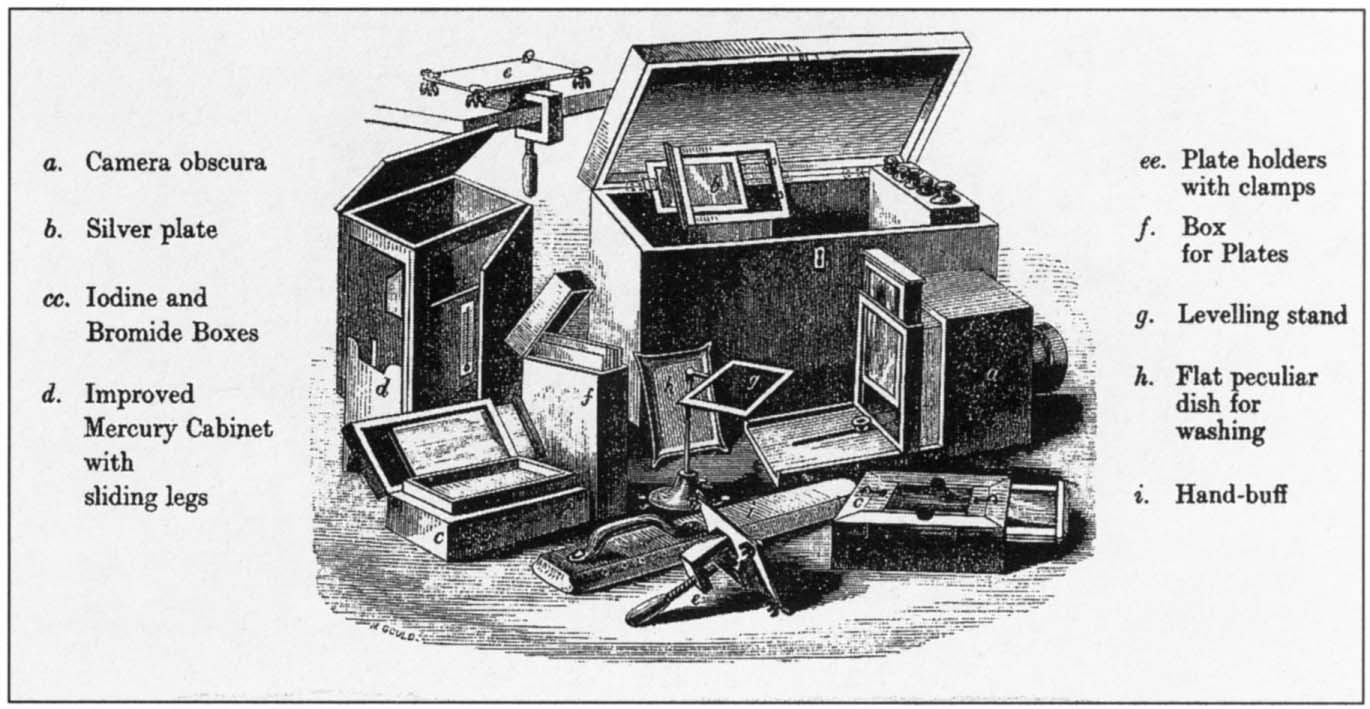
Cameras to take photographs have been used before the early 19th century, since the time of the Renaissance. In those ages a camera known as Camera Obscura was used to project images onto a paper which allowed to photographer to trace it.


Daguerreotype: 1839

Even though many people were working on various techniques for nearly 30 years, 1839, was the dawn of photographic history. Depending on how the light hit the camera, the highly reflective daguerreotype presented either a positive or negative appearance. People would have to pose for their portrait from five minutes to half an hour. This was due to the sensitivity of the photographic plates and the exposure time. The process involved coating a copper plate with silver nitrate which was then sensitized with iodine fumes. When the plate was exposed to light in a camera, it was then developed with mercury fumes and fixed with hyposulphite soda.


Thursday, 21 March 2013

Pre-Raphaelites


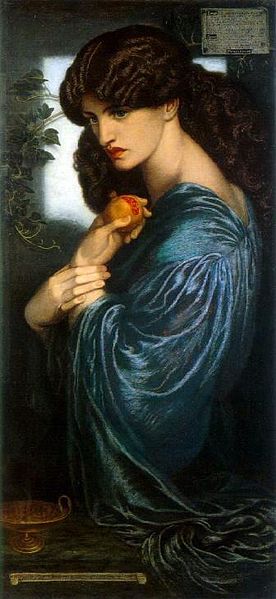
File:Dante Gabriel Rossetti - Proserpine.JPG
The Pre-Raphaelites brotherhood were a group of students which banded together to bring back the interest in painting in Britain in 1848. They are called the Pre-Raphaelites because they came before Raphael. They were seven members but there were the three founders which are, William Holman Hunt, John Everett Millais and Dante Gabriel Rossetti. They were later joined by William Michael Rossetti, James Collinson, Frederic George Stephens and Thomas Woolner Their art works where aimed to be simple to bring out a serious and moralistic theme which felt to be more meaningful. The subjects treated were, Legends, Emigration, Prostitution, Religious Reform, Medieval Themes and the Female Beauty. They used a coloring technique which was building up colors through glazes. This would create the effect of light falling on the subject and also create a depth of filed that was limited when using a mixture of colors on a palette. This was done by using bright transparent colors and thin glazes onto a smooth white ground which was most often the canvas. They also reversed the establishment's order of painting - creating background first, and then putting in the figures. Using a graphite pencil they generally worked out directly on canvas. To bring out the fact the paintings were done in oils, a high-gloss varnish was used as a final touch and this also aided in protecting the surface of the art work.

One of the well known paintings of the Pre-Raphelite Dante Gabriel Rossetti is Proserpine shown on the right.


Victorian Furniture and Homes

The Victorian age was a time of elaborate and elegant ideas including rich deep colours and texture. There was a great use of very bold, bright patterns which included styles as flocking, raised designs with velvety textures. It was also noted that there were some Victorian designs which were infused with the Asian-inspired pieces, some of which were folding screens. These showed strongly in their homes where wealthy people built gothic mansions of stone, which has a simple Greek feel to them. Their homes were very elaborate, ornamented and large complex homes. This was not only found in the homes but also in the furniture inside. Victorian designs were full of wealth, excess and luxury. 

This was done by the style of numerous curved, cluttered lines and complexity. For example richly textured upholstered chairs were carved decoratively with a lot of detailed gilding, ornate carvings and other lavished touches. With mechanization it was possible for middle classes to be able to afford objects traditionally associated with the rich. There was a great demand for furniture to be more just for show rather than actually good quality of workmanship which was often hidden by veneer and applied ornaments. It was full of ornamentation but poor quality and had a lot detailed and extravagant, elaborate in design which could feel messy and cluttered


Impressionism


The art movement of Impressionism originated in France in the last quarter of the 19th century as a reaction against traditional art and its strict rules. It started with the artwork of the French artist Manet, Impression Sunrise. It was the result of a combination and development of many elements from the earlier artists and movements. It was a style of art which was a means to capture the form in a representational artistic style which meant it did not mean it was not of realistic depictions. Impressionism changed art. Their main focus was on the optical light effects which conveyed time. Change in weather and other natural effects. This was a tiring process which requested a lot of observation and endless sketching to try to recreate light itself with paints and brushes. 

Their painting techniques were harshly criticized as being unfinished and seemingly novice quality of brush work. Though they managed to blend complementary primary, secondary and tertiary colors together next to each other to be able to recreate colors which are found in nature; their brushwork was not smooth and was visibly seen. This was due to the fact they began mixing colors right on their canvases instead of their palettes since now they had the availability of tubes of paint which could close. Most impressionistic art works depicted the modern life of Paris.


http://www.impressionism.info/info.html

http://www.theartstory.org/movement-impressionism.htm

http://arthistory.about.com/od/impressionism/a/impressionism_10one.htm

http://arthistory.about.com/od/impressionism/bb/impressionism.htm